Dr. Gymbro
←

#corn protein

1 article
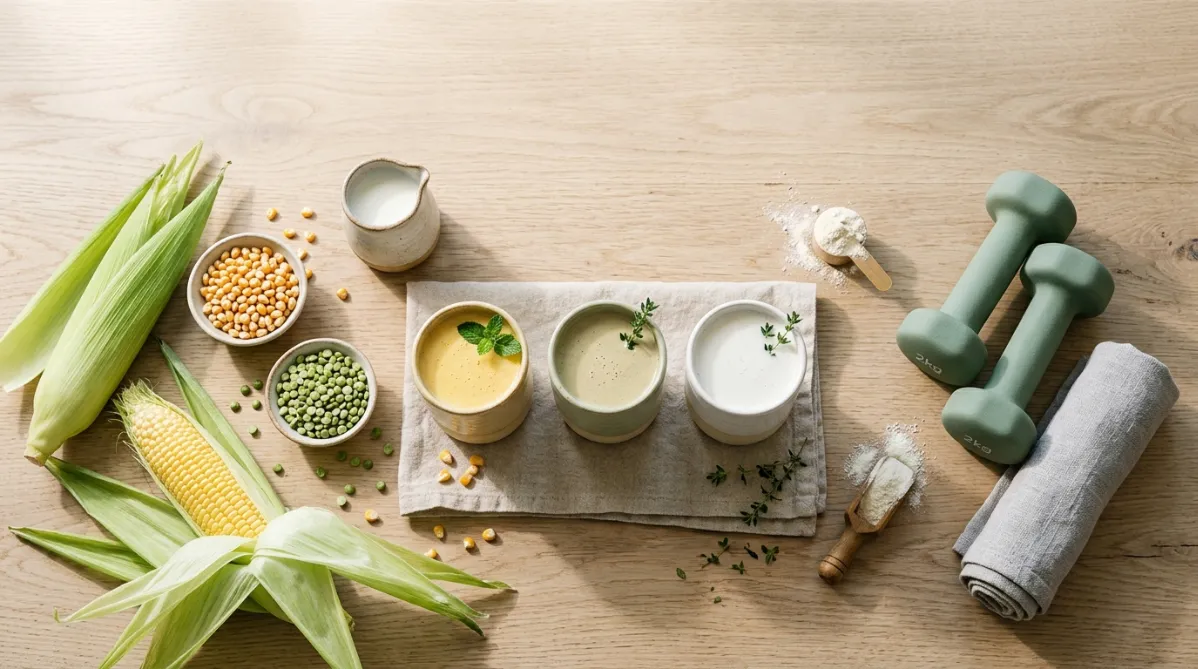
A bright, airy overhead flat-lay on a pale oak wooden table in soft morning daylight. At the center, three matching ceramic glasses in a neat row, each holding a creamy shake in a slightly different tone: one warm golden-yellow, one soft sage green-beige, one pure milky white. Beside the glasses, small shallow ceramic bowls hold the raw sources: dried yellow corn kernels, split green peas, and a small pitcher of fresh milk. A few fresh corn husks and a single ear of corn with pale green leaves are arranged diagonally across the left side of the frame, while a sprig of fresh herbs adds a touch of green. On the right, a pair of matte sage-green dumbbells and a rolled linen towel suggest light resistance exercise, placed with calm, editorial restraint. A linen napkin, a wooden scoop dusted with fine powder, and a few scattered kernels add natural texture. The color palette is warm cream, butter yellow, muted sage, and soft white, with gentle natural shadows falling to the lower right. Shallow depth of field, clean negative space at the top for headline overlay, minimalist modern magazine styling, crisp food-photography look, subtle film-like grain, wide landscape composition.
nutrition

Das Pflanzenprotein, das Milch im Muskelaufbau jetzt gleichzieht

BY DR. GYMBRO ·

Pflanzenprotein gilt traditionell als weniger wirksam als Milch, wenn es um Muskelaufbau geht – doch eine neue Studie an älteren Menschen zeigt, dass Maisprotein dieser Annahme nicht standhält. In einer randomisierten Untersuchung mit 48 gesunden Probanden im Durchschnittsalter von 68 Jahren erhöhten 20 g Maisprotein, ein Erbse‑Mais‑Blend und Milchprotein die Muskelproteinsynthese deutlich über das Placebo, ohne dass sich die Protein‑Gruppen unterschieden. Widerstandstraining verstärkte den Effekt in jeder Gruppe. Hier erfahren Sie die Dosierung, die Zahlen, für wen es geeignet sein könnte und die wichtigsten Vorbehalte, bevor Sie Ihren Shake austauschen.

This page is available in